Image
In 2026, Drupal—a platform beloved across the globe—reached the significant milestone of its 25th anniversary. To commemorate this landmark year, we are presenting a special interview series featuring the invaluable insights shared by leaders at DrupalCon Nara last autumn.
Note: In this article, comments made by Drupal founder Tim Doyle are italicized.
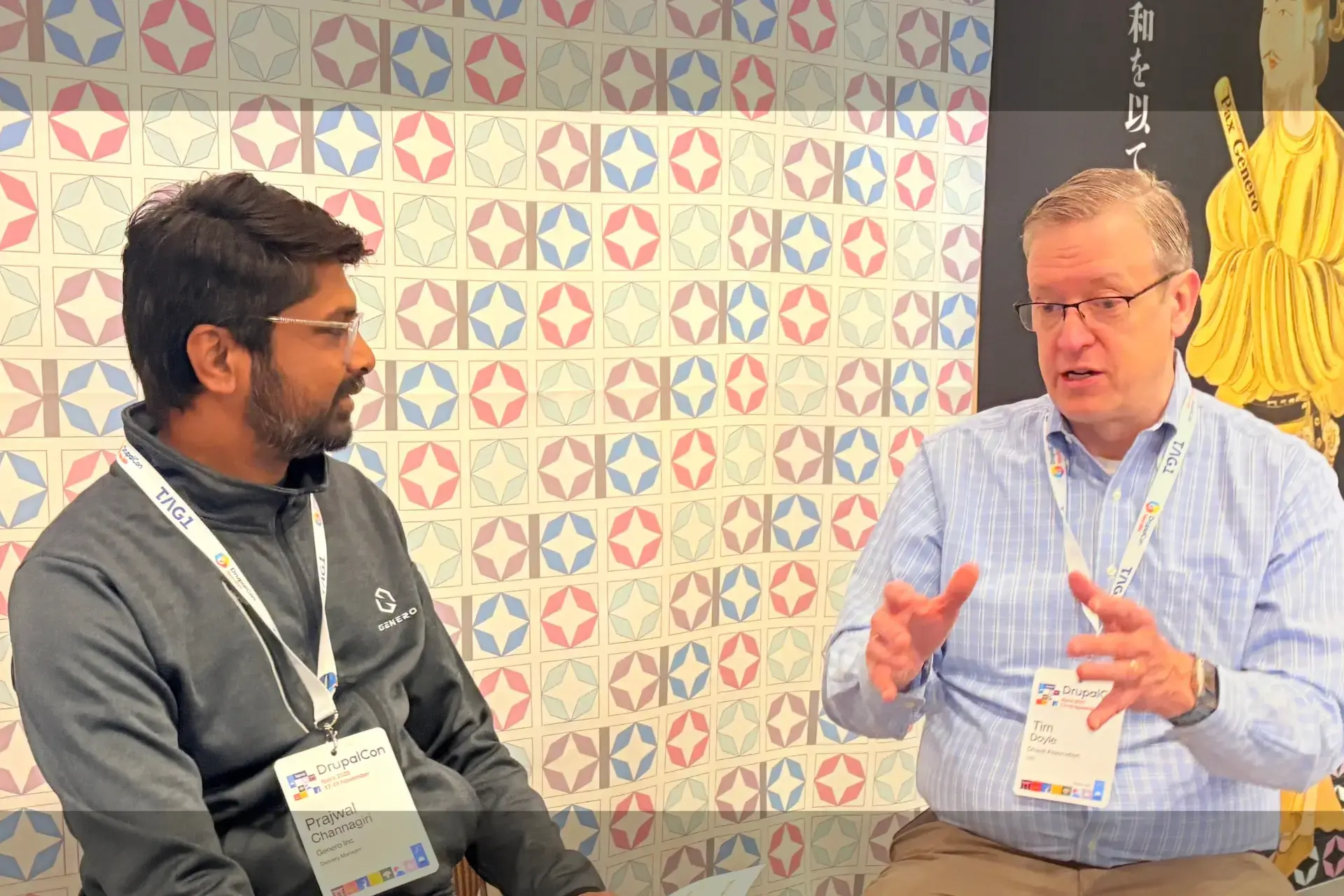
Tim Doyle (right) being interviewed at the DrupalCon Nara 2025 venue.
At DrupalCon Nara 2025, held in Japan for the first time, DXTimes had the opportunity to speak with Tim Doyle, CEO of the Drupal Association.
As a key leader within the Association, Doyle plays a central role in supporting the sustainability and global growth of the Drupal community—a 25-year-old open source project that continues to evolve.
In this interview, Doyle reflects on how the Drupal ecosystem has changed in recent years, the launch of Drupal CMS, and why AI represents what he calls “the biggest wave Drupal has ever faced.”
Doyle has been deeply involved with Drupal for roughly three years, a period he describes as one of remarkable change.
One of the clearest turning points was the period before and after COVID-19.
During the pandemic, demand for digital transformation surged. Organizations across industries accelerated their digital initiatives, and Drupal benefited from that momentum.
“During COVID, digital transformation efforts were extremely active, and business was strong,” Doyle recalls.
In the post-COVID environment, however, economic conditions shifted. Budget pressures increased, and questions emerged within the community about Drupal’s future direction.
“After COVID, the economy softened, and people began asking, ‘Where is Drupal going from here?’”
It was in this context that Drupal CMS was introduced.
From build to launch, Drupal CMS was developed in approximately 18 months—an unusually fast pace for a project with Drupal’s long history.
“In those 18 months, we achieved something truly remarkable—from initial development all the way to launch,” Doyle says.
The release attracted significant attention, including from major players such as Google. More importantly, Drupal CMS is not a one-off initiative; it is already moving into its next phase.
“We’re now preparing to release the second version of Drupal CMS.”
For a platform often associated with stability and long-term planning, this speed signals a meaningful shift in how Drupal evolves.
Alongside Drupal CMS, another force has begun reshaping the landscape: generative AI.
According to Doyle, AI is not simply another feature or tool—it is changing how people think about technology and how they approach daily work.
“AI isn’t just another initiative. It’s transforming how we understand technology itself, and how people engage with their work.”
While uncertainty around AI is widespread, Doyle is clear that Drupal is choosing to embrace, not avoid, this change.
He references a metaphor shared by Drupal founder Dries Buytaert at DrupalCon:
When American bison face a storm, they run toward it. The fastest way through the storm is not to flee, but to confront it head-on.
Doyle believes the same mindset applies to AI.
“We don’t have all the answers before entering the storm. We’re already in it—and we have to learn and adapt as we go.”
He is confident that Drupal is well positioned to emerge stronger on the other side.
“No matter what kind of new world emerges, Drupal is in a very strong position to navigate it and come out better.”
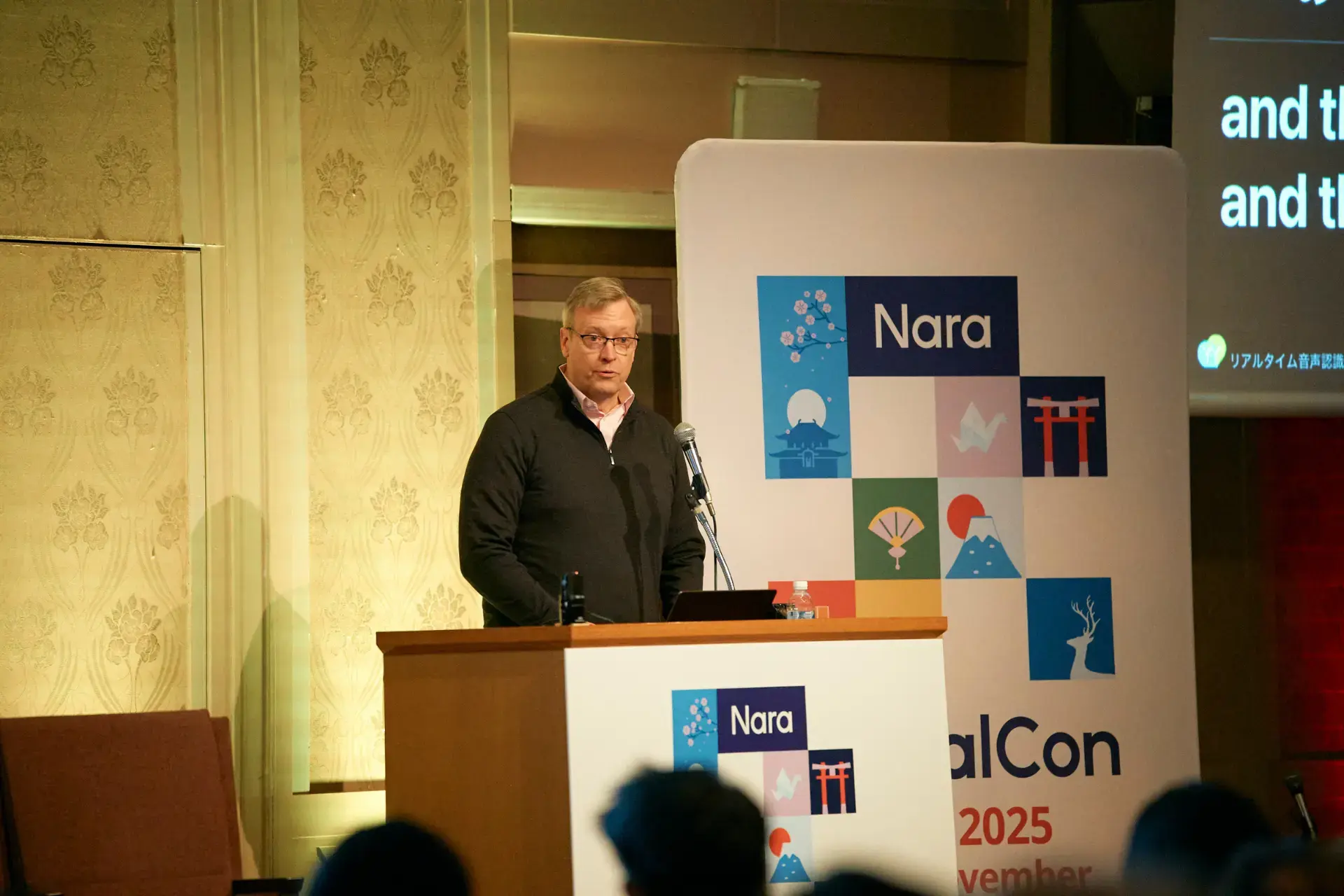
Tim Doyle speaking at the DrupalCon Nara 2025 venue.
Drupal’s longevity is rare in the software world. Few platforms remain relevant for 25 years, let alone continue to evolve.
Doyle describes the current moment as a critical inflection point.
“Drupal has a 25-year history, but right now we’re standing on the edge of its next major evolution—one that will be more dynamic than anything before.”
A key reason Drupal is ready for AI, he explains, lies in architectural decisions made years ago—particularly the structural changes introduced during the transition from Drupal 7 to Drupal 8.
“Those changes put Drupal in a very strong position for AI today.”
During his visit to Japan, Doyle also gained a new appreciation for the local Drupal ecosystem.
“Seeing it firsthand, I realized how many active companies and compelling projects exist here. The strength of the Japanese Drupal community was truly eye-opening.”
The first-ever DrupalCon in Japan marked more than just a regional milestone—it represented a deeper connection between the Drupal Association and the Japanese community.
Doyle closes with a clear sense of optimism:
“The transformation ahead for Drupal is incredibly exciting. I’m genuinely looking forward to the next 25 years.”
With Drupal CMS and AI advancing simultaneously, Drupal is confronting what may be the most significant transition in its history.
Rather than stepping back, the project is choosing to move forward—accepting uncertainty and finding answers along the way.
From Tim Doyle’s perspective, this is not a moment of hesitation, but one of confidence rooted in community, architecture, and shared values.
DXTimes will continue to follow Drupal’s evolution and the thinking that drives it.
Serialized Article


