Image
— An Interview with Drupal Founder Dries Buytaert —
In 2026, Drupal—a platform beloved across the globe—reached the significant milestone of its 25th anniversary. To commemorate this landmark year, we are presenting a special interview series featuring the invaluable insights shared by leaders at DrupalCon Nara last autumn.
Note: In this article, comments made by Drupal founder Dries Buytaert are italicized.
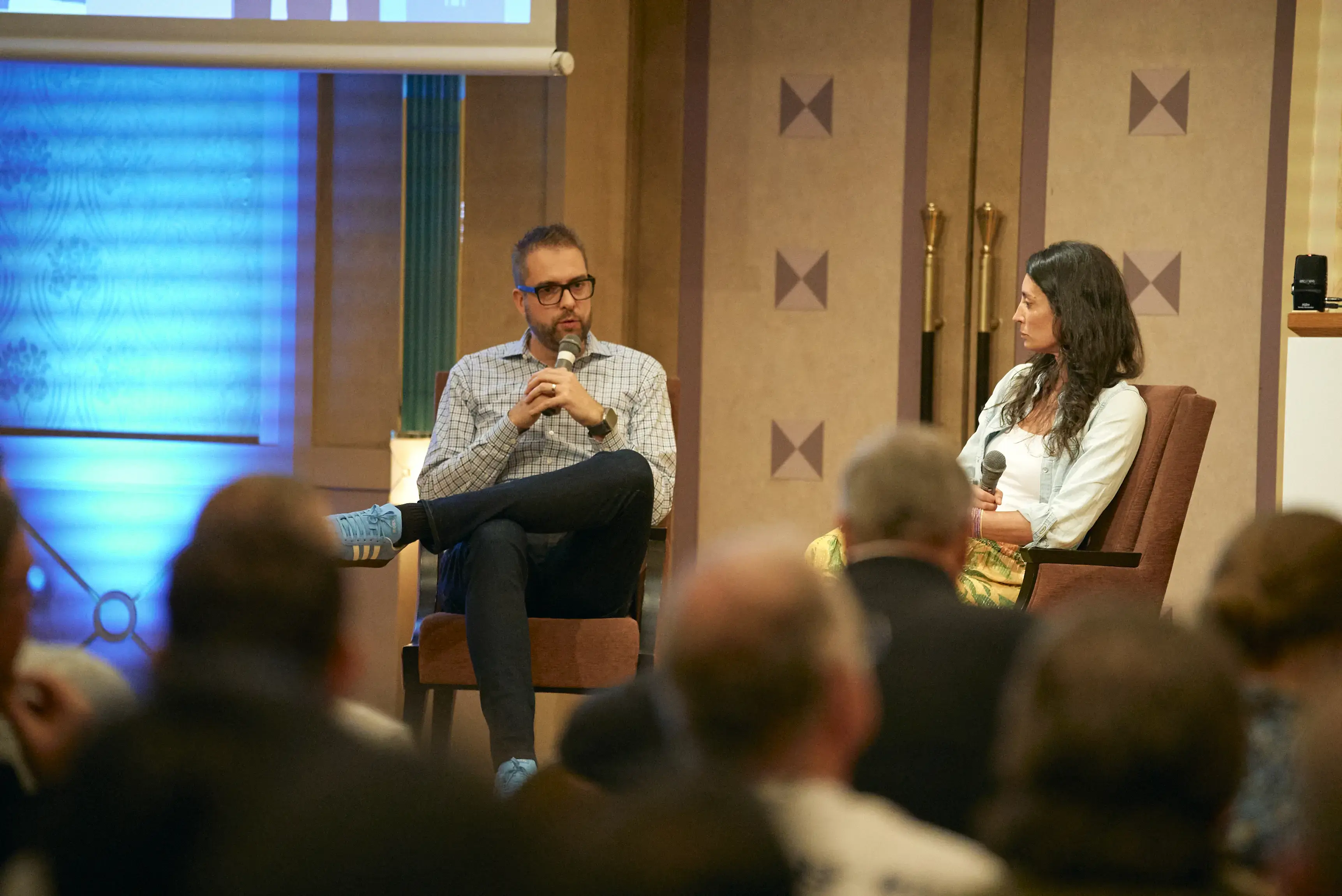
Dries during a Q&A session at DrupalCon Nara 2025.
In Part 1 of this series, we explored how open source is evolving in the age of AI—and how Drupal is preparing for that future.
In this second installment, we turn our focus to a long-standing question:
Why has Drupal consistently been chosen by enterprises and government organizations around the world?
The answer lies not in features alone, but in Drupal’s deep commitment to security, trust, and governance—values that have guided the project for more than two decades.
Organizations in highly regulated environments—such as governments, financial institutions, and large enterprises—tend to adopt new technologies carefully.
Dries Buytaert acknowledges this reality:
“Many organizations are understandably cautious when it comes to adopting new technologies like AI.”
Concerns around data privacy, compliance, and long-term risk are universal.
However, Dries emphasizes that despite different adoption speeds, organizations worldwide share the same objectives:
Doing more with limited resources
AI has the potential to accelerate all of these goals—if it is implemented responsibly.
One of Drupal’s defining strengths is its respect for data ownership and control.
Rather than forcing organizations into a single AI ecosystem, Drupal introduces an AI abstraction layer, allowing teams to make deliberate choices about how AI is used.
With this approach, organizations can:
This flexibility is particularly critical for governments and enterprises that must comply with strict regulations around data protection.
“Organizations should have control over where their data goes and how it is used.”
Drupal’s AI strategy is built around a clear principle: AI should assist humans, not replace them.
To support this, Drupal emphasizes transparency and accountability:
“We don’t want AI to operate as an uncontrollable black box.”
This “human-in-the-loop” design ensures that responsibility remains with people—not algorithms—making Drupal suitable for mission-critical environments.
At first glance, some may assume that proprietary software is more secure than open source. Drupal’s long history tells a different story.
Because Drupal is open source:
This transparency is one of the reasons governments and enterprises continue to trust Drupal for long-term digital platforms.
Trust is not built on technology alone—it also depends on governance and sustainability.
Drupal is supported by the Drupal Association, a nonprofit organization that reinvests revenue from:
This model ensures that Drupal’s evolution is driven by community needs rather than short-term commercial pressure.
“Sustainability is an ongoing challenge—but transparency and reinvestment are essential.”
Drupal’s continued adoption by enterprises and governments is no accident.
It is the result of deliberate design choices:
Together, these elements make Drupal not just a powerful CMS—but a trusted digital foundation.
In Part 3, we will explore the other side of Drupal’s success:
the community that has sustained the project for over 25 years—and what Dries Buytaert hopes for the future, including Drupal’s role in Japan and beyond.
【Part 3】The Secret Behind 25+ Years of the Drupal Community
Read Part 1 here:【Part 1】The Future of Open Source in the Age of AI— An Interview with Drupal Founder Dries Buytaert —