Image
— An Interview with Drupal Founder Dries Buytaert —
In 2026, Drupal—a platform beloved across the globe—reached the significant milestone of its 25th anniversary. To commemorate this landmark year, we are presenting a special interview series featuring the invaluable insights shared by leaders at DrupalCon Nara last autumn.This article marks the conclusion of our three-part interview series with Drupal founder Dries Buytaert.
Note: In this article, comments made by Drupal founder Dries Buytaert are italicized.
In the open-source ecosystem, longevity is the exception rather than the rule.
Many projects start with strong momentum but fade as contributors move on, maintainers burn out, or communities fragment.
Drupal is different.
For more than 25 years, Drupal has continued to evolve while maintaining an active global community.
According to Drupal founder Dries Buytaert, this durability is not accidental—it is the result of deliberate choices about how the project and its community are structured.
Dries emphasizes that Drupal was never designed as a short-term experiment.
From its early days, the project assumed:
“Drupal was built with the expectation that it would need to evolve for decades.”
This long-term mindset shaped not only Drupal’s architecture, but also how its community operates.
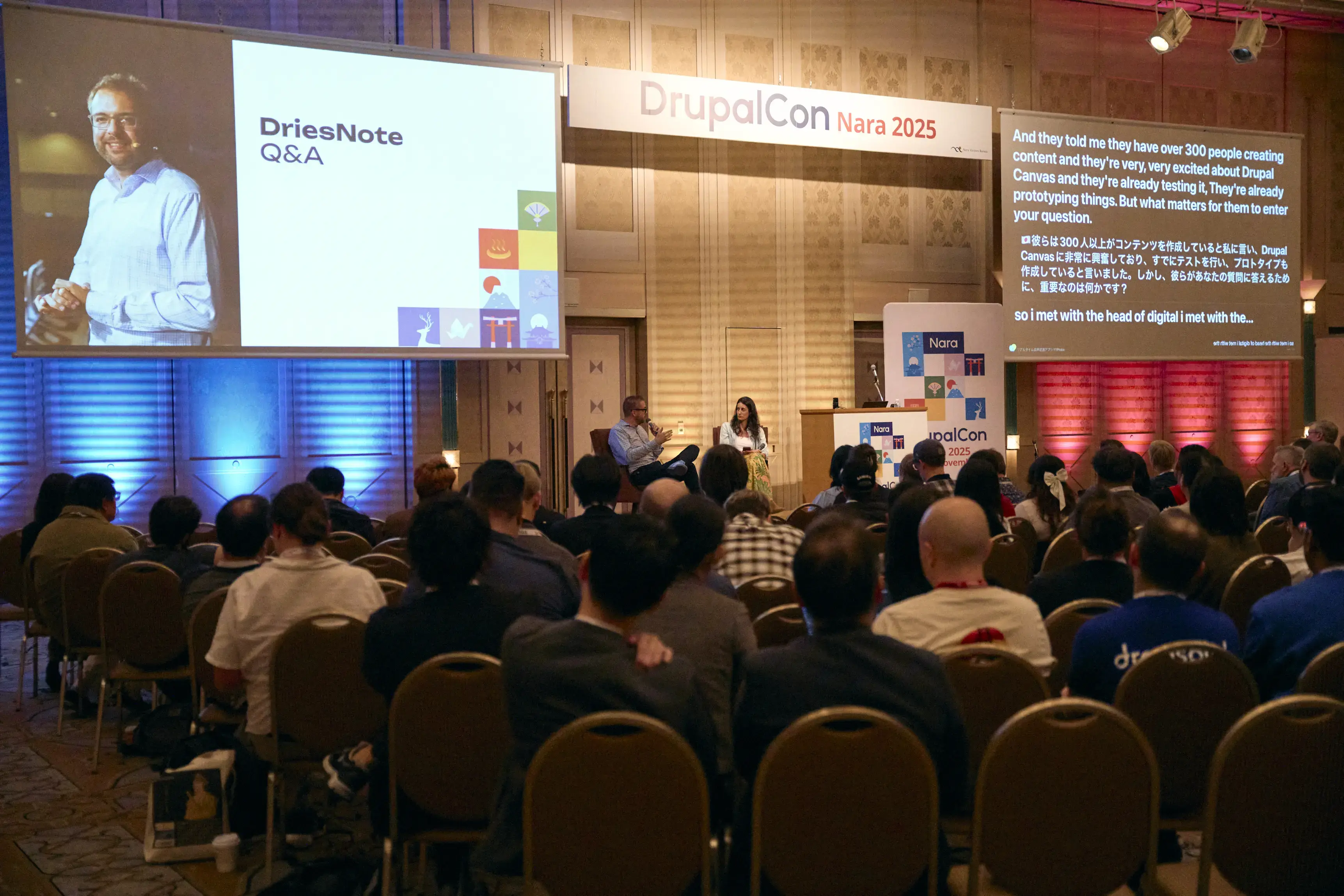
Bridging borders: Business leaders and engineers from around the world gather to seek Dreis’s insights at DrupalCon Nara 2025.
One defining characteristic of the Drupal community is that contribution is considered a normal and expected part of participation.
Drupal does not separate users from contributors in rigid ways.
People who rely on Drupal are encouraged to support it in return.
“Open source cannot be sustained by consumption alone.”
This shared responsibility helps prevent the imbalance that causes many projects to stagnate.
Importantly, Drupal recognizes that not all contributions involve writing code.
Valid and valued forms of contribution include:
Dries notes that acknowledging these roles lowers the barrier to entry and allows people with different skills to participate meaningfully.
“Not everyone needs to be a great programmer to contribute.”
As the community has grown and diversified, Drupal’s approach to knowledge sharing has evolved.
While written documentation remains important, it is now complemented by:
Dries views this shift as a response to how newer generations prefer to learn—not a replacement, but an expansion of available formats.
Drupal is used globally, but English is not the first language for many contributors and users.
Dries highlights translation and localization as essential contributions that:
“Translation is not just support work—it directly helps communities expand.”
Despite the growth of online collaboration, Dries continues to emphasize the importance of in-person gatherings.
Local meetups provide:
“Meetups create trust, and trust strengthens communities.”
Drupal meetups in Japan play a meaningful role in sustaining local engagement.
Looking ahead, Dries points to the importance of younger contributors entering the ecosystem.
Education, university involvement, and early exposure to open source help ensure continuity.
“The next 25 years of Drupal will depend on the next generation.”
Encouraging students and early-career engineers to participate is therefore critical for the project’s future.
Drupal’s longevity is not explained by technology alone.
It is sustained by:
These factors have allowed Drupal to remain relevant—and trusted—for more than two decades.
As DrupalCon and local events continue to bring people together, the Drupal community remains the foundation on which the project’s future is built.
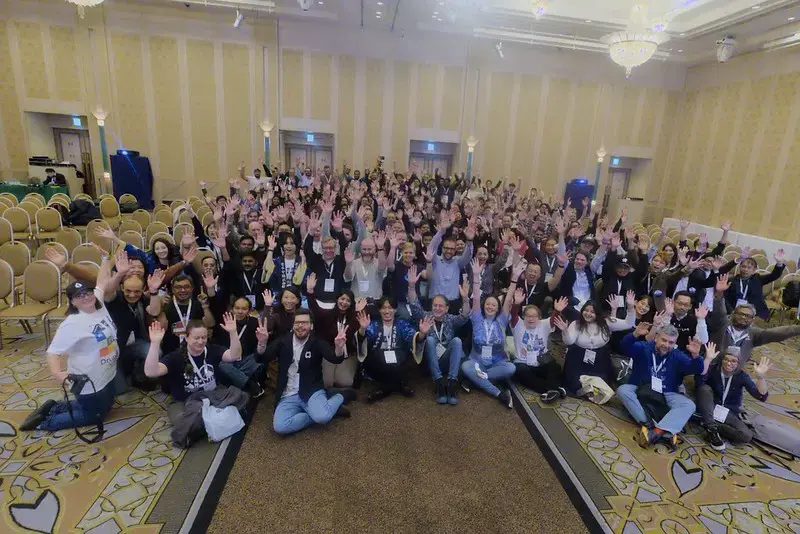
Dreis and the vibrant Drupal community at DrupalCon Nara 2025.
End of the Interview Series
This article concludes our three-part interview series with Dries Buytaert.
Across all three parts, one message remains consistent:
Drupal’s strength lies not only in its software, but in the people and principles that sustain it.
Serialized Article